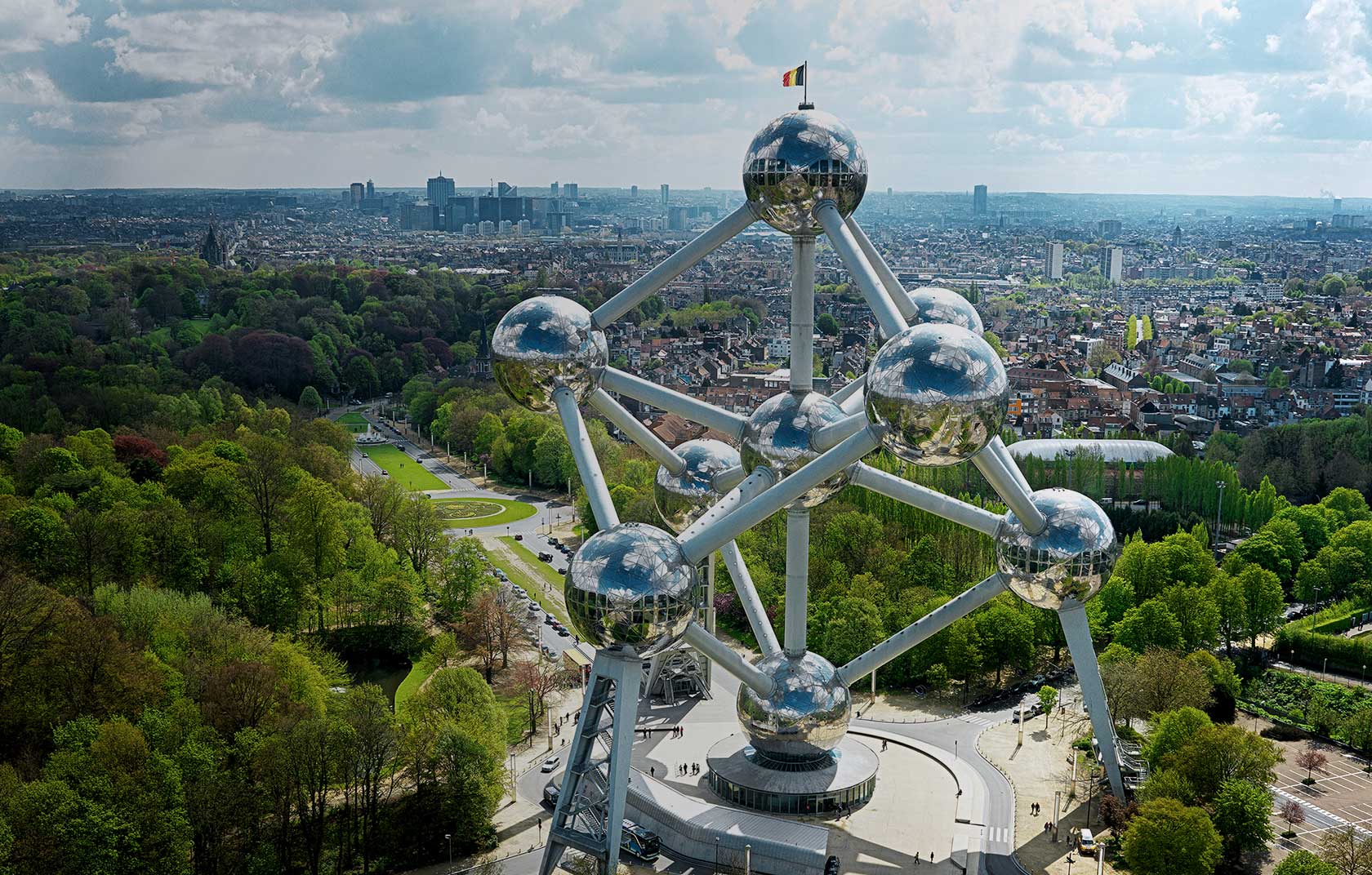
Renovated as a major national event between 2004 and 2006, the Atomium - which was not intended to survive Expo 58 for which it was the flagship construction - is today, with over 800,000 visitors per year, the most popular tourist attraction in the capital of Europe, an art centre and an international symbol of Brussels and Belgium.


.jpg)


The Atomium is celebrating the 20th anniversary of its renovation with an exceptional anniversary programme. Discover the full programme for 2026.

In addition to its heritage value, the Atomium is also a cultural place. Over half of the visit is dedicated to exhibitions with themes about digital arts. Discover our exhibitions.

.png)
.png)


Discover our podcasts, which take you to the heart of Brussels’ most iconic landmark. Across two seasons, dive into the history of the Atomium.
.png)

.jpg)
![educational folder [french & dutch]](/flexpage/galleryimage?path=/Content/Images/User/atomium-todaylife-0184w.jpg)

Due to its unique structure in the world, its emblematic character and its resolutely futuristic aspect: the Atomium enjoys international recognition at an institutional, cultural and artistic level. This strong brand image offers many opportunities for collaboration, ranging from renting a part of the building to co-branding and filming.